


1 October 2026 · From the field · 2 min read
Bhoodan Pochampally is about ninety minutes east of Hyderabad, on a road that runs out of traffic somewhere past Bhongir. You know you have arrived because the yarn is drying in the street.
That is the first surprising thing about ikat: almost all of the work happens before anyone sits at a loom.
In ikat the pattern is dyed into the yarn, not printed onto the cloth. Bundles of thread are bound tight exactly where the colour must not reach, then dipped. Untie, rebind somewhere else, dip again. Four colours means four full cycles of tying, dyeing, drying and untying — and the tying is worked from a graph the weaver has drawn out on paper beforehand.
Single ikat resist-dyes only the warp. Double ikat does warp and weft both, which means the two have to meet in register on the loom: a motif appears only if the weaver throws the right dyed segment of weft at the right moment. Every pick is a small alignment decision, and the diamond drifts if enough of them go wrong.
This is why the edges of an ikat motif feather. That soft bleed is the residue of thousands of micro-corrections — the signature of the technique, not a fault in it. A printed imitation has hard edges, every time.
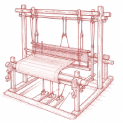
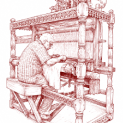
The looms here are pit looms, sunk into the floor of the front room, and a household usually works as a pair: one person tying and dyeing, the other weaving. A six-and-a-half yard double ikat saree takes around three weeks of that shared work, which is roughly eighteen sarees a year from one house.
That number is the whole economics of the cluster. It is why a real Pochampally costs what it does, and why the ones we carry come with the household named on the making record.