


1 October 2026 · From the field · 1 min read
When we list an Uppada jamdani we put the days on the loom next to the price. Thirty-eight, for the sea green and gold. People ask, reasonably, what could possibly take that long.
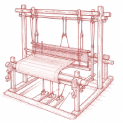
The figure in a jamdani is not stitched onto finished cloth. It is woven into it with a discontinuous supplementary weft: a short length of extra thread laid in by hand for each motif, while the ground is being built around it. Nothing is carried across the back between motifs, which is why the reverse of a jamdani is nearly as clean as the front — and why every motif has to be placed individually.
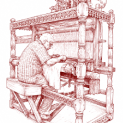
Uppada jamdani is worked by a pair sitting side by side at the same loom. One passes the ground weft; the other places the figure. They have to agree, continuously and without discussion, on where the pattern sits relative to the ground. A saree cannot simply be handed to a second shift, which is why the calendar and the labour are the same number.
We print the days because it is the only honest way to explain the price of a handwoven saree. Materials are a minority of what you pay. The rest is thirty-eight days of two people's attention, and there is no version of jamdani that takes less.
It is also a check you can make. Any seller quoting a jamdani price should be able to tell you how long it sat on the loom. If they cannot, ask why.